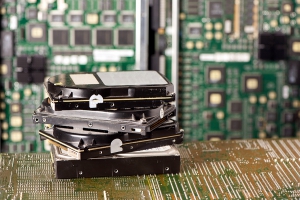
One of the most common causes of identity theft and data breaches stems from improper disposal of electronics like hard drives. With computers an ever-present in our personal and business lives, ensuring proper, secure destruction of your hard drive should be top of your mind when you’re upgrading your personal or work computer.
Just ask Affinity Health Plan, who paid a $1.2 million fine several years ago because the hard drives in their copiers still held protected health information (PHI) and other sensitive documents. Or Morgan Stanley, who paid $35 million for a similar incident. Check out our complete guide on secure hard drive destruction services to ensure your business doesn’t fall to the same fate.
Why Shred Your Hard Drives?
Just like sensitive paper documents, digital data poses a security risk for individuals and businesses. Information protection and destruction laws, including HIPAA and FACTA, apply to hard drive destruction as well as the destruction of their hard-copy counterparts. If not properly destroyed, thieves can access, use, and take the confidential information these hard drives store.
As a result, secure destruction of these hard drives is critical to protect your privacy and other important information. Steep fines can result in violations related to improper handling of data. With these steep fines, and the potential loss of trust due to a data breach, private information needs to be carefully handled.
The covered entity did not know and could not reasonably have known about the breach
$120-$60,226 per violation
Second Tier
The covered entity “did not know and could not reasonably have known about the breach”knew, or by exercising reasonable diligence would have known” of the violation, though they did not act with willful neglect
$1,205-$60,226 per violation
Third Tier
The covered entity “did not know and could not reasonably have known about the breach”acted with willful neglect” and correct the problem within a 30-day time period
$12,045-$60,226 per violation
Fourth Tier
The covered entity “did not know and could not reasonably have known about the breach”acted with willful neglect” and failed to make a timely correction
$60,226-$1,806,757 per violation
What Electronic Items Need to Be Safely Destroyed?
You should shred every hard drive and electronic device containing sensitive data. This includes many different types of devices that store sensitive data, including:
Hard drives across devices (solid state/rotational/magnetic)
USBs or flash drives
Zip or floppy disks
SCSI drives
Magnetic tapes
Audiovisual media (CDs/DVDs/VHS tapes/cassette tapes)
CPUs
Mobile devices (cell phones/tablets/laptops/PDAs)
Gaming systems
Televisions
Credit and debit cards
X-rays
Badges
Microfilm and microfiche
Backup tapes
RAM and ROM-based storage
Biomedical devices (infusion pumps/MRI and CT machines/ventilators/ultrasound devices)
Any system or device that at any time contained private information
If you are ever unsure, it’s important to go ahead and destroy it anyway. It’s better to be safe than sorry when trying to protect sensitive information. Additionally, never recycle electronics without properly destroying the information on them first. Electronics should be recycled rather than thrown in the trash, but the information on them must be destroyed first. Thieves target electronics dropped off at the recyclers because they often still have valuable information on them.
Secure Hard Drive Destruction Methods
There is extraordinary pressure from legal authorities and the general public to scrupulously maintain organizational security. When it’s time to get rid of an old hard drive, there are a few different ways to go about removing information, including:
Option 1: Formatting Hard Drives
This consists of formatting the hard drive and wiping it clean of all stored data. However, just reformatting a hard drive could lead to security issues. With the right software, the data remains recoverable.
Option 2: Degaussing Hard Drives
Degaussing hard drives consists of using magnets to create an electromagnetic field that leaves the information on a hard drive unreadable. While effective, degaussing is an expensive and time-consuming process.
Option 3: Hard Drive Shredding
Hard drives can be physically destroyed using hard drive shredding services. This consists of using an industrial shredder able to handle heavy-duty projects. Hard drives and electronic media are shredded and broken into thousands of pieces.
Unlike with formatting or degaussing, complete hard drive destruction leaves zero chance for digital data recovery. This is because the device becomes a pile of tiny fragments. It’s also sustainable, as the tiny pieces are then recycled in compliance with EPA standards.
How Do Secure Hard Drive Destruction Services Work?
Hard drive destruction is one of the most common and secure options for businesses and individuals to use. Unlike degaussing or reformatting, the process of recycling e-waste is straightforward to understand.
After deciding on a hard drive destruction provider, our partner companies can come to you to pick up materials and devices for your convenience. If you would like to witness the destruction process, then you can request a mobile shredding service to shred them on-site. There’s also the option to ship the hard drives directly to a shredding provider.
Once your hard drives and media are collected, they’re destroyed using industrial shredders. In addition, all of our service providers are compliant with EPA and state hazardous waste laws and regulations.
Once the hard drive destruction process is complete, your provider will send you a certificate of destruction. This details the chain of custody for materials during destruction as well as where, when, and who did the shredding. Also, a certificate of destruction guarantees the use of best practices and compliance with HIPAA and FACTA.
Do You Need Secure Hard Drive Destruction Services? Shred Nations Is Your Solution
Hard drive recycling and destruction services are one of the most secure ways to safeguard critical digital documents at a reasonable cost. Shred Nations partners with a nationwide network of electronic media destruction and shredding providers. We help connect businesses and individual providers who can handle their project size, budget, and schedule.
To request a quote, fill out the form, give us a call at (800) 747-3365, or contact us directly using our live chat to get free hard drive destruction quotes from providers near your home or business.
This website utilizes technologies such as cookies to enable essential site functionality, as well as for site improvement analytics and personalized services. We also share user traffic data with our analytics and search engine paid advertising platforms for improving performance of these campaigns. Personal information such as name, phone, email address and zip code is used by us and our servicing partners to contact you and service your request. By continuing to use this website, clicking OK, or by closing this notice using the 'X', you consent to the use of cookies. Not consenting or withdrawing consent, may adversely affect certain features and functions. To manage your preferences, please click on the Opt-Out Personal Information and Cookie Preferences link. You may also exercise your Do Not Sell My Personal Information option by clicking on the Opt-Out Personal Information and Cookie Preferences link.
Functional
Always active
The technical storage or access is strictly necessary for the legitimate purpose of enabling the use of a specific service explicitly requested by the subscriber or user, or for the sole purpose of carrying out the transmission of a communication over an electronic communications network.
Preferences
The technical storage or access is necessary for the legitimate purpose of storing preferences that are not requested by the subscriber or user.
Statistics
The technical storage or access that is used exclusively for statistical purposes.The technical storage or access that is used exclusively for anonymous statistical purposes. Without a subpoena, voluntary compliance on the part of your Internet Service Provider, or additional records from a third party, information stored or retrieved for this purpose alone cannot usually be used to identify you.
Marketing
The technical storage or access is required to create user profiles to send advertising, or to track the user on a website or across several websites for similar marketing purposes.
To provide the best experiences, we use technologies like cookies to store and/or access device information. Consenting to these technologies will allow us to process data such as browsing behavior or unique IDs on this site. Not consenting or withdrawing consent, may adversely affect certain features and functions.
Functional
Always active
The technical storage or access is strictly necessary for the legitimate purpose of enabling the use of a specific service explicitly requested by the subscriber or user, or for the sole purpose of carrying out the transmission of a communication over an electronic communications network.
Preferences
The technical storage or access is necessary for the legitimate purpose of storing preferences that are not requested by the subscriber or user.
Statistics
The technical storage or access that is used exclusively for statistical purposes.The technical storage or access that is used exclusively for anonymous statistical purposes. Without a subpoena, voluntary compliance on the part of your Internet Service Provider, or additional records from a third party, information stored or retrieved for this purpose alone cannot usually be used to identify you.
Marketing
The technical storage or access is required to create user profiles to send advertising, or to track the user on a website or across several websites for similar marketing purposes.