


hredding Services Available Across Greenville County
Organizations in Greenville don’t all generate records the same way, which is why shredding services here tend to fall into a few distinct patterns.
Some offices need regular, predictable disposal tied to retention schedules. Others accumulate records slowly and require periodic purge services. Still others prioritize on-site destruction for internal control or public accountability reasons.
Through Shred Nations, Greenville customers can access:
- Mobile on-site shredding performed at their location
- Secure off-site shredding with controlled transport and facility-based destruction
- Scheduled shredding programs for recurring disposal
- One-time purge shredding for large cleanouts
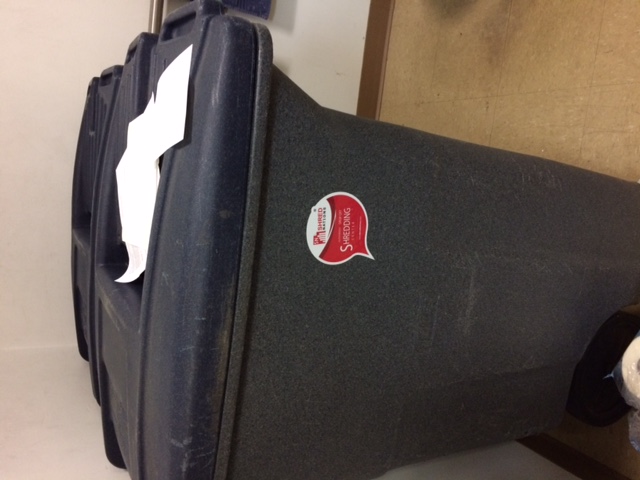
- Secure drop-off options for small volumes
- Physical destruction of electronic media and hard drives
Each service model is supported by documented handling procedures and post-service verification.
How South Carolina Law Influences Document Destruction
South Carolina does not prescribe a single method for destroying records, but it does establish clear expectations around outcomes: personal and confidential information must be disposed of in a way that prevents access, reconstruction, or misuse.
This approach places responsibility squarely on organizations to choose destruction methods that match the sensitivity of the data involved and to be able to explain those choices if questioned.
South Carolina Identity Theft Protection Act (S.C. Code § 37-20-180)
This law requires businesses and government entities to take reasonable measures to destroy records containing personal identifying information. Shredding is widely recognized as a compliant disposal method because it renders information unreadable and irretrievable.
South Carolina Data Breach Notification Act
While focused on breach response, this law reinforces the importance of limiting unnecessary data retention. Secure shredding helps reduce exposure by ensuring outdated records are not retained longer than needed.
Fair and Accurate Credit Transactions Act (FACTA)
FACTA applies to organizations handling consumer credit information, requiring proper disposal to prevent identity theft. In Greenville, this commonly affects financial institutions, educational offices processing financial aid data, and government agencies managing benefit records.
Gramm-Leach-Bliley Act (GLBA)
Financial institutions must protect customer information throughout its lifecycle, including during disposal. Secure shredding supports GLBA’s Safeguards Rule by eliminating residual data risk.
Family Educational Rights and Privacy Act (FERPA)
Educational institutions must protect student records and ensure proper disposal once records are no longer required. Shredding helps schools and administrative offices maintain compliance with federal education privacy standards.
Together, these laws make document destruction less about “cleanup” and more about closing the loop responsibly.
Greenville Shredding Company Network Statistics
Commercial vs Residential Shredding in Greenville
Average Local Shredding Order Size
Businesses/large organizations and high-volume residential customers are matched to Greenville-area shredding companies with the required certifications and service offerings.
| Shredding Customer | Average # of Boxes |
|---|---|
| Business and Government | 170 |
| Residential and Home Office | 6 |
| Small Volume Drop-Off | .5 |
| Local Shredding Drop-Off Sites | 21 |
Most Popular Industries Served
| Educational Institutions |
| Government and Public Sector |
| Financial Services |
Large-Volume Record Destruction for Institutional Offices
Many institutional offices across Greenville manage records in concentrated batches rather than through continuous disposal programs. School districts, county agencies, and centralized financial or administrative departments often retain paper files for extended periods due to retention requirements, staffing limitations, or legacy workflows. Over time, this results in storage rooms, warehouses, or off-site facilities filled with accumulated records that must eventually be destroyed in a single coordinated effort.
Local shredding providers regularly support large-scale destruction projects by deploying high-capacity equipment and trained crews capable of processing significant volumes efficiently. These projects emphasize secure handling, controlled access, storage rooms, and detailed documentation verifying that long-retained records were permanently removed from circulation and disposed of in accordance with approved retention schedules.
Shredding Services Aligned with Greenville’s Core Industries
Greenville’s shredding demand is heavily influenced by a small number of industries that handle large volumes of sensitive information as part of their daily operations. Our provider network is built to support these sectors with services tailored to their operational realities.
Department-by-Department Shredding for Decentralized Organizations
Many institutions across Greenville operate in decentralized environments, with records dispersed across multiple buildings, departments, or satellite offices. School districts, municipal agencies, and large nonprofits often maintain independent file systems tied to departmental workflows rather than a single centralized archive. As a result, document disposal is frequently handled in phases rather than as a single event.
Shredding providers familiar with Greenville’s public and educational sectors can schedule multi-stop service routes that allow departments to clear records independently while maintaining consistent security standards and unified documentation.
End-of-Term and Fiscal-Year Cleanout Shredding
In Greenville, shredding demand often spikes around academic year transitions and fiscal closeouts. Educational institutions and government offices use these windows to clear records tied to completed programs, expired funding, or closed cases.
One-time shredding services aligned with these cycles help organizations reduce storage pressure without disrupting active operations. Providers experienced with cycle-driven cleanouts can scale staffing and equipment to meet compressed timelines while supplying documentation suitable for audits, grant reporting, or year-end compliance reviews.
Secure Disposal for Financial Records and Client Documentation
Financial organizations in Greenville handle a steady stream of paperwork tied to lending, advising, and account administration. Even after digitization, paper records frequently remain subject to retention rules and disposal requirements under FACTA and GLBA.
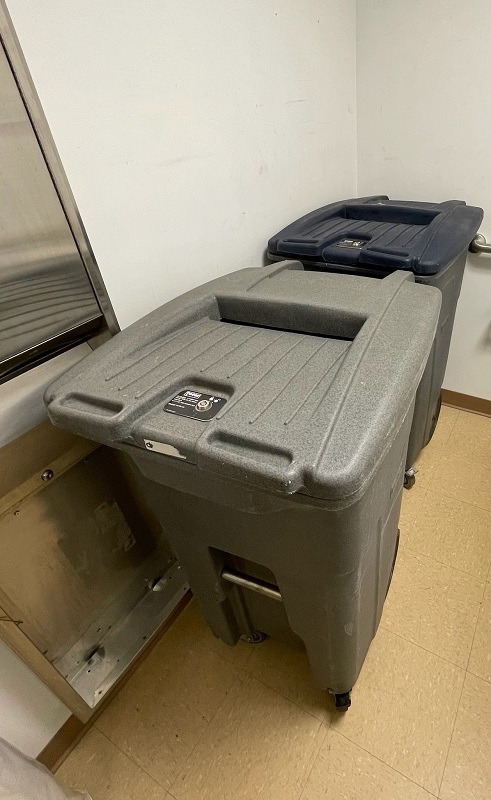
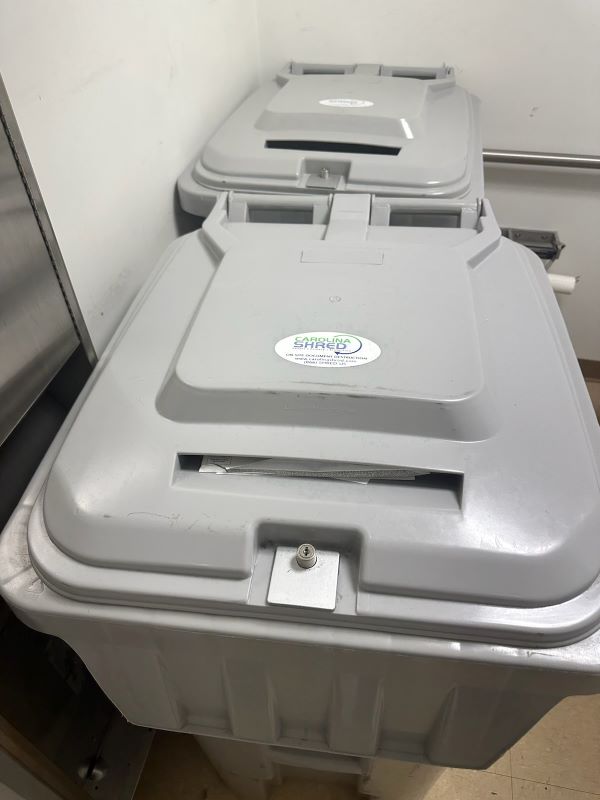
Shredding services designed for financial offices emphasize controlled handling at every stage, from pickup through destruction. Locked containers, documented chain of custody, and Certificates of Destruction help ensure customer information is rendered unreadable once retention obligations are met, without placing additional burden on internal staff.
Public-Facing Shredding for Government Transparency Needs
Government agencies in Greenville often place additional emphasis on shredding practices that are defensible and easy to explain. Whether responding to public records requests, internal audits, or oversight reviews, agencies benefit from disposal processes that clearly demonstrate compliance with retention schedules and privacy obligations.
On-site or witnessed destruction is commonly used in these settings to support transparency and accountability, particularly when disposing of personnel records or constituent information. Providers accustomed to working with public agencies understand the importance of visibility, repeatable procedures, and clear documentation that supports both transparency and accountability in public-sector operations.
Small-Batch Shredding for Administrative Overflow
Not every shredding project in Greenville involves large purge volumes. Administrative offices, satellite programs, and temporary initiatives often generate smaller quantities of sensitive paperwork that still require secure disposal. Allowing these materials to accumulate while waiting for a larger cleanout can increase exposure unnecessarily.
Flexible shredding options — including scheduled pickups or secure drop-off — allow smaller batches to be destroyed promptly. These services help organizations maintain consistent disposal habits, reduce clutter in active workspaces, and prevent minor backlogs from becoming long-term storage liabilities.
Physical Destruction of Obsolete IT Assets
As schools, agencies, and financial firms modernize systems, outdated computers, servers, and storage devices often remain in circulation longer than intended. Hard drives, backup tapes, and legacy media can retain recoverable data even after software-based deletion, creating hidden security risks.
Local shredding providers offer physical destruction services designed to permanently disable electronic storage devices. By shredding or crushing media beyond recovery, organizations can close data gaps that paper shredding alone cannot address. These services are commonly paired with records cleanouts to support comprehensive information security strategies.
Shredding Support During Office Moves and Space Reconfiguration
Office relocations and space reconfigurations are common triggers for secure shredding in Greenville, especially within public sector spaces and educational environments. Rather than transporting outdated records to a new location, organizations often choose to destroy them before the move.
Shredding services scheduled alongside relocation timelines allow organizations to dispose of expired records before the move. This approach simplifies logistics, reduces moving expenses, and ensures that only active, approved materials are transferred into newly configured spaces.
Every shredding project has its own constraints, and no single solution fits every situation. Shred Nations works with Greenville customers to explore practical options for secure document disposal, taking into account both compliance considerations and day-to-day logistics. If you’re considering your next step, we’re available to help you think it through.