

The Health Insurance Portability and Accountability Act (HIPAA) mandates stringent guidelines to ensure the privacy and security of patients’ protected health information (PHI). Proper destruction of medical records is a critical aspect of HIPAA compliance, preventing unauthorized access and safeguarding sensitive data. This comprehensive guide aims to provide healthcare professionals and organizations with a clear understanding of the HIPAA-compliant destruction of medical records.
Understanding HIPAA Regulations
HIPAA regulations set the standard for the protection of sensitive patient information. Covered entities, including healthcare providers, health plans, and healthcare clearinghouses, must adhere to the Security Rule and Privacy Rule. Properly disposing of medical records falls under the Security Rule’s administrative safeguards, specifically addressing the final disposition of PHI.
Identifying PHI in Medical Records
Before initiating the destruction process, it is crucial to identify and locate all instances of PHI within medical records. PHI includes any information that can be used to identify an individual, such as names, addresses, Social Security numbers, and medical history. This meticulous identification ensures that no confidential information is left unattended during the destruction process.
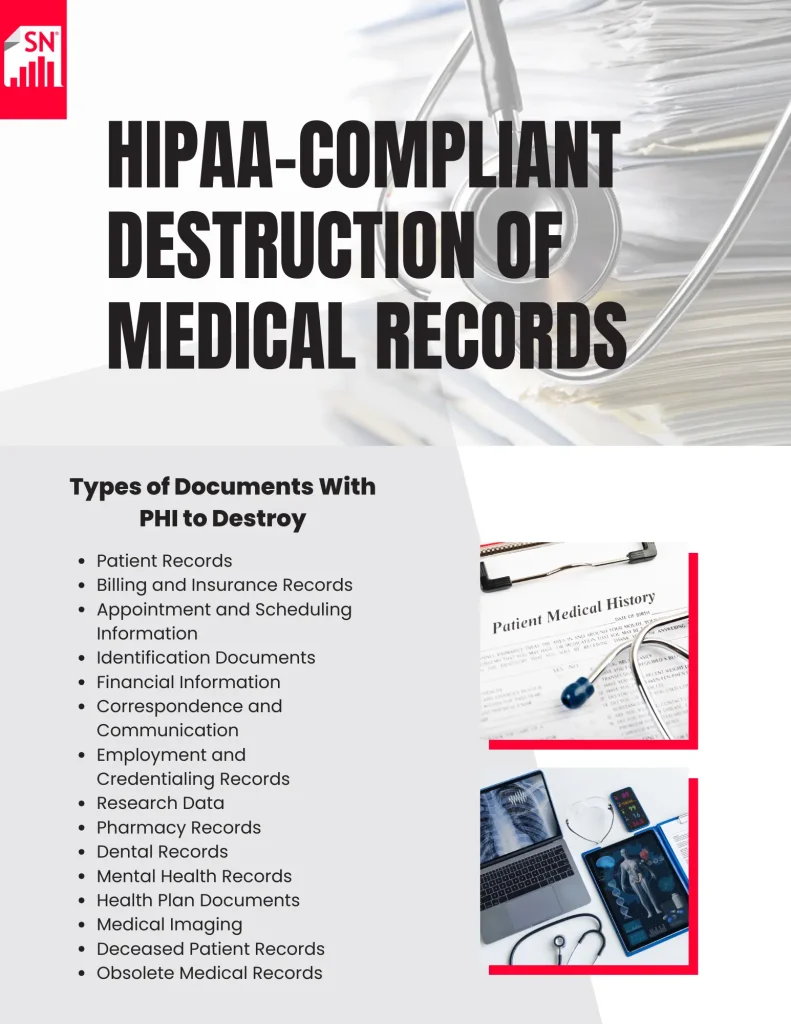
Types of Documents With PHI to Destroy
The following types of medical documents should be shredded to ensure the protection of patients’ protected health information (PHI):
| Type of Record | Specific Document Examples |
| Patient Records | Patient medical histories Treatment plans Laboratory results Radiology reports Prescription information Progress notes |
| Billing and Insurance Records | Invoices Billing statements Insurance claims Explanation of Benefits (EOB) |
| Appointment and Scheduling Information | Appointment schedules Appointment reminder lists Patient sign-in sheets |
| Identification Documents | Copies of driver’s licenses Social Security numbers Insurance identification cards |
| Financial Information | Credit card information Bank account details Financial assistance applications |
| Correspondence and Communication | Letters containing PHI Emails with patient information Faxes containing medical details |
| Employment and Credentialing Records | Employee files with medical details Credentialing applications Employment contracts |
| Research Data | Research participant information Institutional Review Board (IRB) documents |
| Pharmacy Records | Medication lists Prescription records |
| Dental Records | Dental treatment records X-rays and imaging results |
| Mental Health Records | Psychotherapy notes Counseling records Substance abuse treatment records |
| Health Plan Documents | Health plan enrollment forms Benefit summaries Authorization forms |
| Medical Imaging | X-rays MRIs CT scans |
| Deceased Patient Records | Records of deceased patients must be treated with the same confidentiality and should be securely shredded. |
| Obsolete Medical Records | Medical records that are no longer required for legal or business purposes should be shredded to avoid any potential breach. Be sure to check with your specific state’s retention periods for medical records before shredding. |
Types of Medical Records Destruction
There are several methods for HIPAA-compliant destruction of medical records, each with its own set of advantages and considerations:
Mobile Shredding
For the utmost security, mobile shredding services allow you to witness the shredding process. You will also receive a certificate of destruction for your records when the process is complete for liability protection.
Off-Site Shredding
If you don’t need to witness the shredding, off-site shredding is the next best HIPAA-compliant option. The service provider will come to your location and transport your medical records in a locked bin. The records will be securely shredded at their off-site facility and you will receive a certificate of destruction when the process is complete.
Electronics and Hard Drive Destruction
As healthcare transitions to electronic medical records, additional considerations arise for HIPAA-compliant destruction. Securely destroying electronic devices, such as hard drives and mobile devices, is essential to prevent data breaches. Working with certified professionals and employing data destruction services can help ensure the permanent deletion of PHI from electronic media.
Best Practices for the Destruction of Medical Records
Establish Policies and Procedures
To ensure a consistent and HIPAA-compliant approach to the destruction of medical records, healthcare organizations should establish comprehensive policies and procedures. These should outline the steps involved in the destruction process, from identifying records to the final disposal method. Training staff on these policies is crucial to maintaining a culture of compliance within the organization.
Secure Storage Before the Destruction

Before destruction, medical records awaiting disposal should be securely stored to prevent unauthorized access. Off-site storage facilities come equipped with access controls, surveillance, and secure storage areas. These are essential components of maintaining the confidentiality of PHI during your records retention period. Implementing secure storage measures helps prevent accidental exposure or theft of sensitive information.
Select HIPAA-Compliant Service Providers for the Destruction of Medical Records
When outsourcing the destruction of medical records, healthcare organizations must carefully select service providers that adhere to HIPAA regulations. It is essential to choose reputable vendors with a track record of compliance, proper certifications, and secure processes. Additionally, obtaining written assurances of compliance through Business Associate Agreements (BAAs) is crucial when partnering with external service providers.
Documentation and Recordkeeping
Maintaining your certificates of destruction from your destruction service is a key element of HIPAA compliance. These certificates should include details such as the date of destruction, the method used, a list of records destroyed, and the individuals involved in the process. This documentation serves as evidence of compliance in the event of an audit or investigation.
Auditing and Monitoring
Regular audits and monitoring are essential components of a robust HIPAA compliance program. Healthcare organizations should conduct periodic audits to assess the effectiveness of their medical records destruction processes. These audits can identify areas for improvement and ensure ongoing adherence to HIPAA regulations.
The Benefits of Medical Records Shredding
The destruction of medical records not only keeps you in compliance with HIPAA and helps you avoid fines, but it also provides peace of mind to your patients. Shredding medical records ensures that sensitive patient information is irreversibly destroyed, protecting individuals from identity theft and unauthorized access to their personal health information.
For electronic medical records (EMRs) and other digital formats, secure destruction methods offer enhanced security. Proper disposal of electronic media prevents unauthorized access and ensures the permanent removal of sensitive information.
Shred Nations Can Help You With HIPAA-Compliant Destruction of Medical Records
To keep in compliance with HIPAA, securely destroy your paper and electronic medical records with Shred Nations. Give us a call at (800) 747-3365, fill out the form, or use the live chat to get started today. Within minutes, you will receive quotes from HIPAA-compliant providers in your area ready to help.