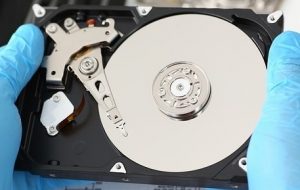
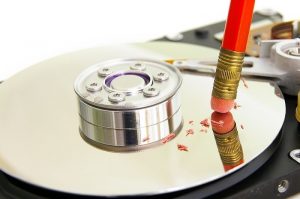
The risks of data breaches and identity theft only continue to grow. While the most common image of a data breach involves the digital world, it can and does happen in the physical one too. Old hard drives are a prime source, and if you don’t take the right steps to destroy the data on them, they can lead to costly and damaging data breaches. There are a few reliable ways to destroy a hard drive, and degaussing is one of those options.
The Importance of Destroying Data on a Hard Drive
All information and historical data from your computer rests on your hard drive. From pictures to emails to passwords, you can find a wealth of personal data if someone accesses your hard drive. Even if you delete the data, thieves can use simple software to recover it.
Since computers don’t last forever, it’s important to make sure that the data on the hard drive gets destroyed when you switch or upgrade computers. One of the most reliable ways to do that is by degaussing the hard drive.
What Does Degaussing a Hard Drive Mean?
At a basic level, hard drive degaussing erases all of your information using a magnetic field. When a hard drive platter spins under a read/write head, it generates small pulses of electricity that magnetize the platter surface as it passes through. By exposing the drive to another strong magnetic field, it removes the drive’s magnetic properties along with the data previously stored on the drive.
Hard drive degaussing machines vary in power, just as hard drives vary in size. While these machines are effective, if there’s a mismatch between the machine and the hard drive power, or if the process isn’t done properly, some data can still be recovered from the hard drive.
Two additional factors, when comparing hard drive degaussing and shredding, are cost and time. Degaussing takes more time, as the machines can’t handle a bulk order in the same way as a shredder. A degaussing machine also doesn’t scale with cost, as a drive must run through the process individually.
Hard Drive Destruction, the Alternative Option
Hard drive destruction is the process of physically shredding the drives. When it comes to shredding, it physically destroys all of the information saved on your hard drive.
Shredding ensures complete data destruction. Additionally, it offers the most security out of any method. When a hard drive gets torn apart, little room for error exists. Typically, hard drive destruction costs between $4-$12 per drive. In addition, as quantity increases, the price per drive goes down.
Is Shredding or Degaussing a Hard Drive More Secure?
While both shredding and degaussing destroy the drives, they perform the function differently. The major variants are cost, time, and security. It’s important to consider the different factors before choosing. This will help you decide which option is best for you.
Get Secure Hard Drive Disposal Services Today
At Shred Nations, we partner with a nationwide network of hard drive and other electronics disposal providers to ensure that no matter your location or destruction needs we can have you covered. If you need help deciding which option to pick, we are happy to make the process easier for you and walk you through it.
Fill out the form, give us a call at (800) 747-3365, or contact us directly with the live chat to start your hard drive destruction and recycling project. We have a network of professional providers that can assist you in your area today.
This website utilizes technologies such as cookies to enable essential site functionality, as well as for site improvement analytics and personalized services. We also share user traffic data with our analytics and search engine paid advertising platforms for improving performance of these campaigns. Personal information such as name, phone, email address and zip code is used by us and our servicing partners to contact you and service your request. By continuing to use this website, clicking OK, or by closing this notice using the 'X', you consent to the use of cookies. Not consenting or withdrawing consent, may adversely affect certain features and functions. To manage your preferences, please click on the Opt-Out Personal Information and Cookie Preferences link. You may also exercise your Do Not Sell My Personal Information option by clicking on the Opt-Out Personal Information and Cookie Preferences link.
Functional
Always active
The technical storage or access is strictly necessary for the legitimate purpose of enabling the use of a specific service explicitly requested by the subscriber or user, or for the sole purpose of carrying out the transmission of a communication over an electronic communications network.
Preferences
The technical storage or access is necessary for the legitimate purpose of storing preferences that are not requested by the subscriber or user.
Statistics
The technical storage or access that is used exclusively for statistical purposes.The technical storage or access that is used exclusively for anonymous statistical purposes. Without a subpoena, voluntary compliance on the part of your Internet Service Provider, or additional records from a third party, information stored or retrieved for this purpose alone cannot usually be used to identify you.
Marketing
The technical storage or access is required to create user profiles to send advertising, or to track the user on a website or across several websites for similar marketing purposes.
To provide the best experiences, we use technologies like cookies to store and/or access device information. Consenting to these technologies will allow us to process data such as browsing behavior or unique IDs on this site. Not consenting or withdrawing consent, may adversely affect certain features and functions.
Functional
Always active
The technical storage or access is strictly necessary for the legitimate purpose of enabling the use of a specific service explicitly requested by the subscriber or user, or for the sole purpose of carrying out the transmission of a communication over an electronic communications network.
Preferences
The technical storage or access is necessary for the legitimate purpose of storing preferences that are not requested by the subscriber or user.
Statistics
The technical storage or access that is used exclusively for statistical purposes.The technical storage or access that is used exclusively for anonymous statistical purposes. Without a subpoena, voluntary compliance on the part of your Internet Service Provider, or additional records from a third party, information stored or retrieved for this purpose alone cannot usually be used to identify you.
Marketing
The technical storage or access is required to create user profiles to send advertising, or to track the user on a website or across several websites for similar marketing purposes.